
Fine Grading
Precision Finish Grading for Construction-Ready Surfaces
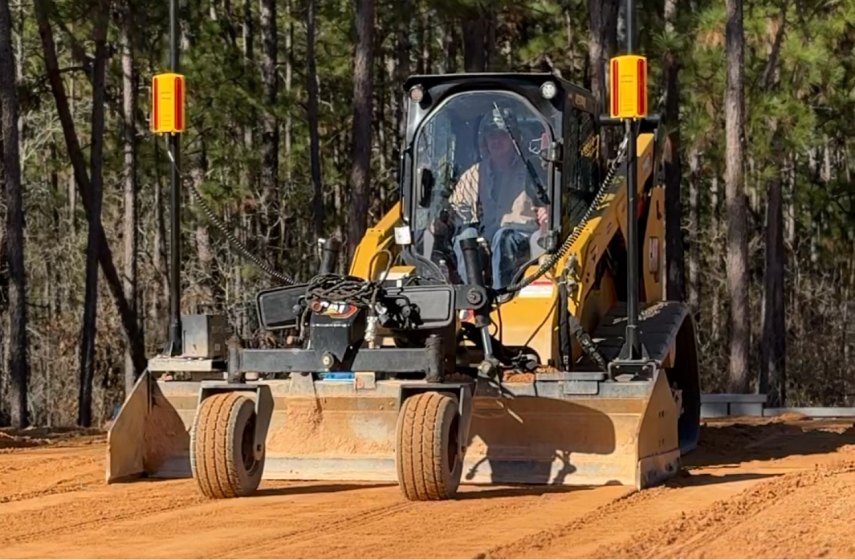
Our fine grading services create the perfect finish for roads, foundations, and landscapes. With meticulous attention to detail and GPS-enabled equipment, we ensure optimal drainage, smooth surfaces, and precise elevations.
Fine grading is the final step before construction begins, and every millimeter counts. Inconsistent grading can lead to drainage issues, uneven surfaces, and long-term structural problems, costing you time and money to fix.
Hurley’s Earthworx provides the precision and expertise you need. Our advanced technology ensures flawless fine grading, so your project starts on a foundation you can trust. Don’t take chances with your final grade; choose a partner who guarantees perfection.
What Fine Grading Involves
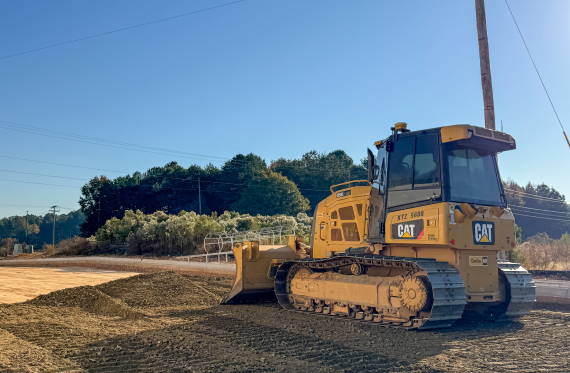
Fine grading typically follows mass grading and subgrade preparation. It brings the surface to within a fraction of an inch of design elevation — often within 0.1 feet of plan elevations for building pads. For paving subgrade, positive drainage slope must be consistent and accurate throughout. We use motor graders and GPS-guided dozers, with laser levels and GPS rovers to check grade throughout the process.
GPS-Guided Fine Grading
Hurley’s Earthworx uses GPS machine control technology as standard for fine grading. Our equipment receives real-time grade data from the engineered plan, allowing operators to maintain accurate elevations across the full graded surface without continuous manual staking. This reduces setup time and produces a more consistent finished grade than conventional methods.
Fine Grading Applications
Common applications include: building pad preparation for residential and commercial construction, parking lot subgrade preparation, roadway subgrade finishing, and yard final grading for drainage and lawn establishment. Each application has its own tolerance requirements — we grade to the standard the project requires.
Common Questions About Fine Grading in NC
What tolerance is required for fine grading under a concrete slab?
Typical specification for building pad fine grading is plus or minus 0.1 feet of design elevation. We discuss the required tolerance with the GC or concrete sub before grading the pad and confirm our finish meets their needs before they mobilise.
How soon after fine grading can concrete or paving start?
Generally the concrete or paving crew can follow immediately if weather has been stable and the subgrade is in good condition. We communicate with the GC about subgrade conditions as part of our handoff and flag any areas that need attention.
What’s the difference between rough grading and fine grading?
Rough grading (or mass grading) moves large volumes of earth to approximate design elevations. Fine grading is the final pass to within the specified tolerance — typically a tenth of a foot. On most projects, mass grading comes first, fine grading last, before any surface construction begins.
Can you fine grade around existing structures or utilities?
Yes. Compact equipment — skid steers, mini excavators, and hand tools — allows us to grade in tight areas around foundations, curbing, and utility boxes. Working around existing improvements requires more care and we factor that into our schedule and quote.
Where do you provide fine grading in Central NC?
We provide fine grading across the Central Piedmont including Montgomery County, Stanly County, Moore County, and Randolph County. Contact us to discuss your project.
With Fine Grading, You’ll Prevent:


Uneven Surfaces

Structural Problems

Lengthy Project Timelines