
By Andrew Hurley | Hurley's Earthworx
Key Takeaways
-
Hurley's Earthworx provides land grading services across the Central Piedmont region of North Carolina, working from its base in Mount Gilead.
-
Professional land grading services use surveying data and GPS-guided equipment to move soil with precision, directing water away from foundations and creating a level, load-ready base.
-
When you are ready to move your project forward, our team is here to plan precise, dependable land grading services that hold to your budget and timeline.
-
Costs for land grading services vary depending on factors like lot size, existing slope, soil conditions, accessibility, and how much material must be moved.
What Is Land Grading and Why It Matters
Land Grading Services: What They Are and Why They Matter for Your Build
Every solid structure starts with stable, properly shaped ground, and that is exactly what land grading services deliver. Whether you are a developer breaking ground on a commercial pad or a homeowner preparing a lot for a new build, the way your site is graded affects drainage, foundation integrity, and your timeline. This guide explains what grading involves, why it matters, and how to plan for it confidently.
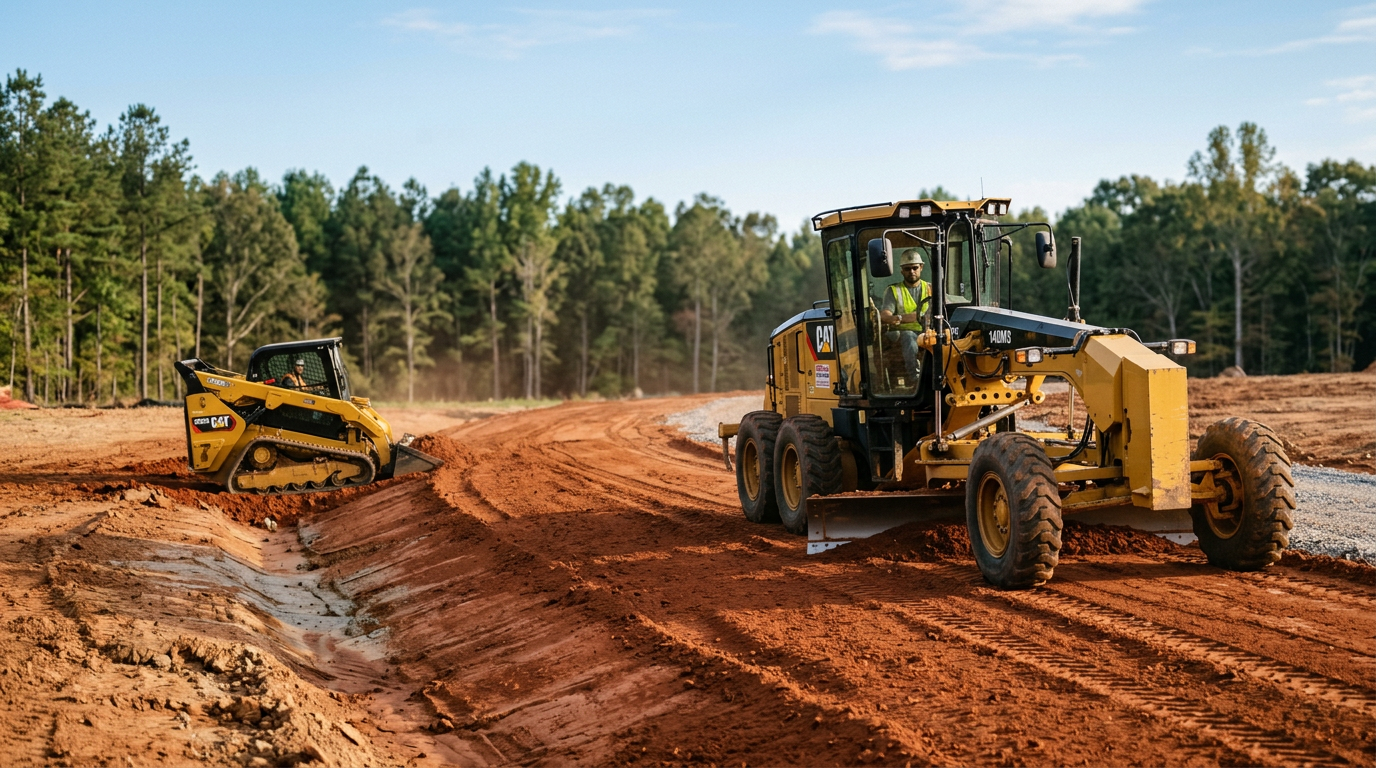
At its core, land grading is the controlled reshaping of a site's surface to establish the correct slope, elevation, and compaction before any structure goes up. Professional land grading services use surveying data and GPS-guided equipment to move soil with precision, directing water away from foundations and creating a level, load-ready base. Why does this matter so much? Poor grading invites standing water, erosion, cracked foundations, and budget overruns that surface long after the concrete is poured. There are practical reasons you might need land grading services, from correcting drainage to preparing a buildable pad, and the work spans both residential site preparation and large-scale mass grading on commercial lots. Grading is also a regulated activity. In North Carolina, state requirements call for an erosion and sediment control plan to be filed whenever a land-disturbing activity will disturb more than one acre. Hurley's Earthworx approaches every site with that blend of precision and compliance.
What Causes Poor Grading and Drainage Issues?
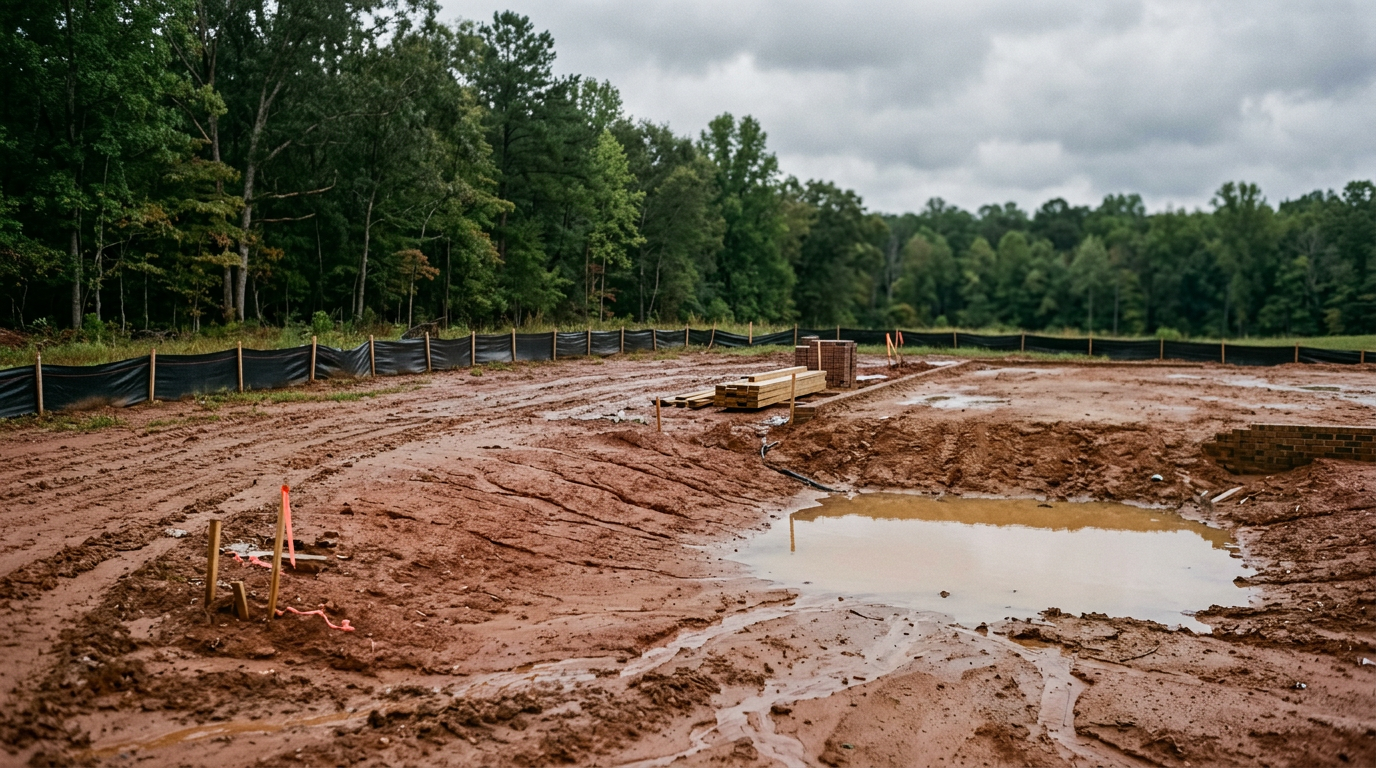
How can you tell when a property needs professional attention before construction begins? Several warning signs point to grading problems that demand expert land grading services. Standing water that lingers for days after rain, soil washing into ditches, gullies forming across a slope, and a foundation that shows cracks or uneven settling all signal that the ground was never shaped to drain properly. At Hurley's Earthworx, we often see these issues on lots where vegetation was stripped without a plan for stormwater flow, where fill was placed without compaction, or where natural drainage patterns were ignored. Other common causes include poorly directed downspouts, compacted clay soils that shed water, and slopes that pitch toward a structure rather than away from it. Inconsistent surfaces, a frequent result of skipping fine grading, often lead to puddling and erosion. Serving Mount Gilead, NC, Montgomery County, NC, and Stanly County, NC, our licensed team reads each site before recommending a fix. If you notice several warning signs of erosion, it is usually time to call a professional rather than wait for the next storm.
Why Does Standing Water Keep Returning?
Standing water is the clearest warning sign of poor grading. When a yard or pad does not slope away from structures, rain collects in low spots instead of draining off, and disrupted drainage patterns generally produce slower-draining, saturated ground. Loose or improperly compacted soil makes it worse, settling unevenly and forming new depressions. Repeated puddling near a foundation is usually your cue to schedule professional land grading services before water reaches the structure.
Rule of Thumb: Read the Ground After Every Storm
-
Watch for water that stands more than 24 hours after rain near foundations or walkways.
-
Look for soil washing into ditches, exposed roots, or small gullies forming on slopes.
-
Note any grade that pitches toward a building instead of carrying water away from it.
-
Document cracks or uneven settling, which can signal poorly compacted fill beneath the surface.
|
Grading or Sitework Element |
Documented Figure or Standard |
What Poor Execution Can Cause |
|---|---|---|
|
Fine grading, soil treatment, and stabilization |
Approximately $4 to $6 per square yard |
Uneven surfaces and erosion on easily erodible soils |
|
Shallow excavation, 1 to 4 feet deep, with a backhoe |
Approximately $6 to $10 per cubic yard of removed material |
Excess soil left in low-lying areas and depressions |
|
Compaction quality-control testing |
ASTM D6938-23 in-place density and moisture test |
Settlement and uneven density beneath foundations |
|
Trenching and excavation safety |
OSHA Subpart P, 29 CFR 1926.650 to 1926.652 |
Cave-ins during one of the most hazardous construction operations |
-
$4 to $6 – Per square yard for fine grading, soil treatment, and stabilization, per EPA earthwork data
-
$6 to $10 – Per cubic yard to remove soil in shallow excavation 1 to 4 feet deep, per EPA
-
2+ weeks – Stabilize graded areas left idle this long to limit washouts and sediment runoff
-
1926.650-652 – OSHA 29 CFR Subpart P standards governing trenching and excavation safety
How Does the Land Grading Process Work?
How exactly does precision earthwork take shape on a job site? The process behind land grading services begins with a detailed survey of the existing ground, capturing current contours, slopes, and drainage patterns. From that data, a grading plan sets target elevations, and crews balance cut and fill, removing soil from high points and placing it where the design calls for added height. According to the U.S. EPA, land grading means reshaping the ground surface to planned elevations laid out by a civil engineer or qualified professional. At Hurley's Earthworx, GPS-guided machinery reads those digital design surfaces in real time, letting operators match grade with remarkable accuracy. Each lift is compacted for stability, and slopes are shaped to move water safely away from structures. This disciplined method carries through our commercial site preparation and the GPS-driven excavation technology we rely on, so land grading services deliver a stable, build-ready foundation.
Ready to Break Ground With Confidence?
When you are ready to move your project forward, our team is here to plan precise, dependable land grading services that hold to your budget and timeline. We will walk your site, answer your questions, and set realistic expectations from day one. To get moving, simply request your free estimate and we will take it from there.
Frequently Asked Questions
What are land grading services, and why do they matter?
Land grading services involve reshaping a property's ground surface to planned elevations so it can support construction and manage water flow. According to EPA land grading guidance, land grading provides more suitable topography for buildings, facilities, and other land uses and helps control stormwater, soil erosion, and sedimentation during and after construction. Good grading creates a stable, well drained base for what you build.
How much do land grading services cost?
Costs for land grading services vary depending on factors like lot size, existing slope, soil conditions, accessibility, and how much material must be moved. Because every site is different, pricing is best determined after a site visit rather than a flat per acre figure. For a closer look at related pricing factors, our guide on the cost to clear land breaks down the variables that shape a budget.
Do I need a permit to grade my property in North Carolina?
It depends on the size and scope of the work. Larger jobs that disturb significant soil often require erosion and sediment control measures, and some need permits from local or state authorities. An experienced contractor can help identify what applies to your land. Our overview of what to know before hiring a contractor covers common North Carolina permitting and compliance considerations.
How does grading prevent drainage and erosion problems?
Proper grading shapes the land so water drains away from structures and toward designated outlets instead of pooling near foundations. It also stabilizes slopes that might otherwise wash out. Many drainage problems trace back to ground that was never graded correctly. Services such as our commercial land clearing services pair precise grading with erosion control to keep a site stable.
Is grading and excavation work dangerous?
Grading and sitework frequently involve excavation, which carries genuine safety risks if handled carelessly. Reputable contractors follow established protective practices: OSHA's excavation guidance describes shoring as a support system for trench faces used to prevent movement of soil, underground utilities, roadways, and foundations. Hiring trained, properly equipped professionals is the safest approach.
What areas does Hurley's Earthworx serve?
Hurley's Earthworx provides land grading services across the Central Piedmont region of North Carolina, working from its base in Mount Gilead. Wondering whether your project falls within our coverage? Visit our areas we serve page to confirm your location, then get a free estimate to discuss your project with our team.